
The Federal Tax Authority’s guidance is clearer than most people assume. Here is what it asks of a company at Dubai South Business Hub Free Zone, plus a relief you may not be able to use.
Somewhere between the sales brochure and the tax return, “free zone” and “no tax” became the same phrase in many founders’ minds. They are not, and if you are planning a company at Dubai South Business Hub Free Zone, you should untangle them first. Since corporate tax took effect for financial years starting on or after 1 June 2023, a free zone company is a taxable person like any other. What it can earn is a preferential rate, and only if it meets conditions worth reading before the first invoice goes out.
How does the two-rate system work?
The Federal Tax Authority (FTA) published its guide on free zone persons in May 2024, and the structure it describes is straightforward. A Qualifying Free Zone Person pays 0% on qualifying income and 9% on the rest of its taxable income. To keep that status, the company must maintain adequate substance in the UAE, earn qualifying income, stay within the limits on non-qualifying income, follow transfer pricing rules, prepare audited financial statements and not elect the standard rate. Fail any one test and the company moves into the ordinary regime, 9% above AED 375,000, from that tax period and for the four periods after it.
One point catches people out: every free zone person must register for corporate tax, qualifying or not. The FTA repeated this at a Dubai awareness workshop in September 2024. A branch of a foreign company registered in a free zone counts as a free zone person too.
Timing matters as well. Under FTA Decision No. 3 of 2024, a company incorporated on or after 1 March 2024 must apply for corporate tax registration within three months of incorporation, and late registration carries an AED 10,000 penalty.
Is a license enough to show substance?
The word that keeps surfacing in the FTA’s guidance is substance, and it involves much more than holding a free zone license. The FTA looks at whether the business has adequate assets, qualified full-time employees and operating expenditure for what it says it does.
Whether a flexi-desk and a small team are enough depends entirely on the activity. For a one-person consultancy, possibly. For a company claiming to run regional distribution, the FTA’s wording suggests it would expect to see a good deal more.
Why do your customers matter as much as your products?
As the FTA guide frames it, income from customers who are not themselves free zone persons counts as qualifying only when it comes from a qualifying activity. Income from transactions with individuals is generally not qualifying, with narrow exceptions, and income from excluded activities never is. That surprises founders who assume a foreign client is automatically safe. It is the reason advisers urge new companies to test their expected revenue mix against the lists of qualifying and excluded activities in Cabinet Decision No. 100 of 2023 before assuming the zero rate.
The guide also tells each company to confirm with its own free zone authority whether it operates in a free zone for corporate tax purposes. There is no single Cabinet list to check.
Could Small Business Relief help you instead?
In August 2026 the Ministry of Finance announced Ministerial Decision No. 131 of 2026, which extends Small Business Relief to tax periods ending on or before 31 December 2029. Businesses with revenue up to AED 3 million can elect to be treated as having no taxable income. The relief is not automatic and has to be claimed in the tax return, and Qualifying Free Zone Persons cannot use it, whatever their revenue.
For a small company at Dubai South Business Hub Free Zone, that creates a real choice. One path is pursuing Qualifying Free Zone Person status, with its audit and substance obligations. The other is asking whether the standard regime and the relief fit a business at an early stage. A free zone company that is not a Qualifying Free Zone Person may be able to consider the relief, but confirm that with an adviser before relying on it. The right answer turns on revenue mix, customer location and appetite for compliance.
Where does this leave you?
Dubai South Business Hub Free Zone lists VAT and corporate tax among its post-license services. Use them to ask sharper questions, not to stop asking. Before you apply, write down three things: who will pay you, for what, and from where. Then have an adviser map each answer to the FTA’s lists.
An eligible license can be issued the same day once your documents are approved. A tax position takes a conversation. It is far cheaper to have that conversation before you start trading than after your first return is due.
Next step: Check my activity and take the result to your tax adviser to test it against the qualifying and excluded activity lists.
About Dubai South Business Hub Free Zone
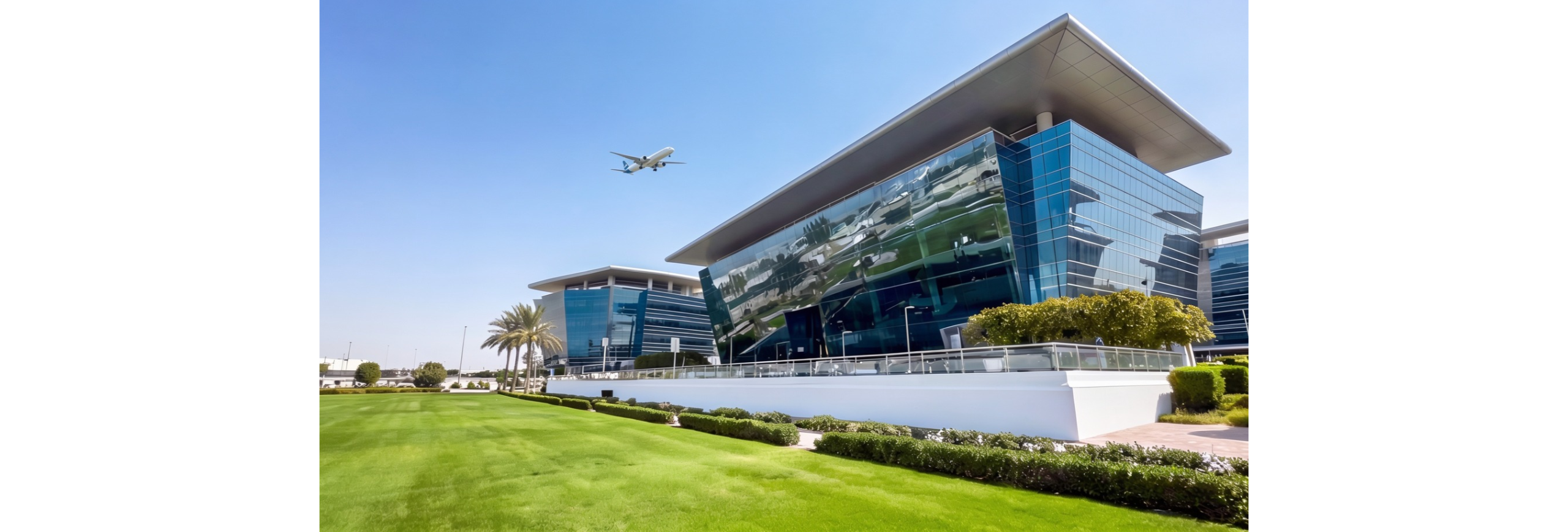
Dubai South Business Hub Free Zone is a fully digital free zone for company formation in Dubai, offering 100% foreign ownership and over 3,500 approved business activities with up to five included on a single license at no additional cost. Founders can complete registration, licensing, visa processing, banking support and ongoing compliance entirely online. Located in Dubai South, the free zone has direct access to Al Maktoum International Airport, Etihad Rail and Jebel Ali Port. For more information, visit dubaisouthbh.com, email [email protected] or call 800-DSHUB (37482).
Written in partnership with Tom White