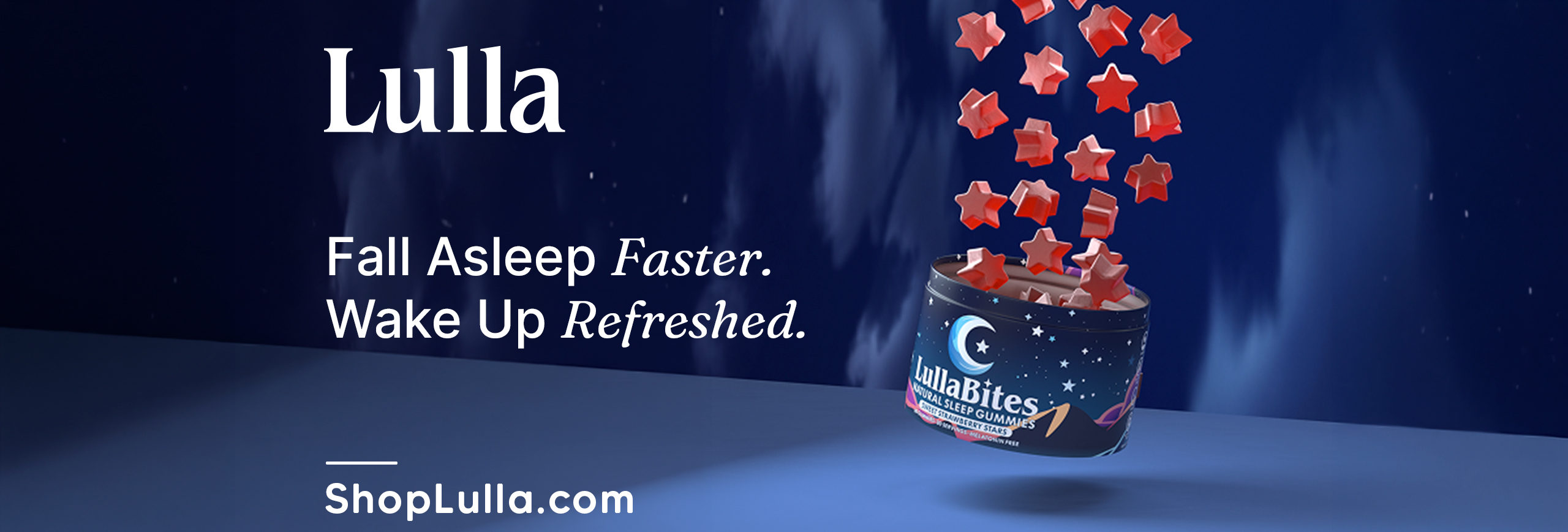

Lulla® didn’t come from some big “lightbulb moment” in a boardroom. It came from a much more familiar place… staring at the ceiling at 2:17 AM, wondering why being exhausted doesn’t automatically mean being asleep.
Because let’s be honest, most people know that feeling.
You’re tired. Like, really tired. But your brain? Still running laps. Replaying conversations. Planning tomorrow. Remembering something mildly embarrassing from 2009. Cool.
And when sleep finally does happen, it’s not always the kind that actually helps. You wake up, go through the motions, and still feel like you’re playing catch-up.
That’s where Lulla’s story begins—not with a pitch, but with a shared frustration.
Why Does Sleep Feel Like Something We Have to Hack?
Like a lot of people, Melatonin seemed like the obvious move.
And to be fair, sometimes it worked.
But other times? Not so much.
Some nights felt fine. Others felt… off. Sleep wasn’t always deep, mornings weren’t always clear, and that groggy, slightly foggy feeling started to become part of the routine.
So the question shifted.
Not “what else can we take?”
But “why does this feel like something we have to force in the first place?”
That question changed everything.
Not Another Sleep Shortcut
A lot of sleep products are built around speed. Knock out faster. Fall asleep quicker. Lights out, problem solved.
But Lulla took a step back and thought… what if that’s not actually the goal?
What if better sleep isn’t about rushing into it, but easing into it?
Instead of focusing on forcing sleep, Lulla is designed to support your body as it naturally winds down in the hours before bed. Because when cortisol levels stay elevated at night, it can make it harder for your body to transition into its natural sleep cycle.
That’s where the melatonin-free approach came from. Not as a trend or a marketing angle, but from real-world experience. The kind where you realize that just because something is common doesn’t mean it’s working the way you want it to—especially night after night.
So instead of tweaking the same formula, Lulla went in a different direction entirely:
Support sleep by helping the body settle into a more balanced nighttime state—so it can produce melatonin on its own.
Built for Real Night Routines (Not Perfect Ones)
From there, the brand focused on creating products that actually fit into how people live.
Not some elaborate, 10-step nighttime ritual. Just simple, consistent options that help signal to your body, “hey, we’re winding down now.”
That’s how the lineup came together:
LullaBites Melatonin Free Sleep Gummies – a simple, easy-to-take gummy option that fits seamlessly into your nightly routine
Lulla Mix Sleep & Hydration Drink Mix – a dual-action hydration and sleep support blend, available in comforting options like hot chocolate and refreshing flavors like lemon lime, with more on the way
Lulla Melatonin Free Sleep Capsules – a straightforward daily capsule designed to support consistent nighttime routines
Lulla Sleep Balance Detox – a 10-day cleanse that supports gut health and helps restore your circadian rhythm
Lulla Magnesium Capsules – an essential sleep mineral formulated to promote deep rest, support muscle relaxation, and help maintain a balanced nervous system
Different formats, same philosophy: work with your body, not against it.
The Quick-Fix Era Is Fading
There’s a shift happening right now in how people think about wellness—and sleep is a big part of it.
The “quick fix” mindset is starting to wear thin. People aren’t just asking, “Did I fall asleep fast?”
They’re asking:
- “Did I actually feel rested?”
- “Did I wake up clear?”
- “Can I rely on this consistently?”
Because at the end of the day, sleep isn’t just about nighttime. It’s about how you show up the next morning.
That’s where Lulla stands out. It’s not trying to be the strongest option on the shelf. It’s trying to be the one that makes sense long-term.
Sleep Doesn’t Have to Be a Battle
Lulla isn’t here to reinvent sleep. It’s here to remind people that maybe it doesn’t need to be so complicated in the first place.
Sleep doesn’t have to feel like a battle.
It doesn’t have to be something you chase, force, or overthink.
Sometimes, it’s about creating the right conditions—and then getting out of your own way.
Or, as Lulla puts it:
Sleep starts with helping your body unwind naturally. No melatonin. No grogginess. Just a more balanced night—and a better morning.
Written in partnership with Tom White