
In recent years, a growing number of business leaders have started to challenge the assumption that company culture is something separate from strategy or performance. Deloitte’s Global Human Capital Trends report shows that 82% of executives believe culture is a “potential competitive advantage.” Yet fewer than one in five executives believe that their organizations have the “right culture.” These disparities are occurring across industries, in addition to employee disappointment, they can surface as leadership frictions and high turnover rates, urging companies to rethink not just how they lead, but what they are prioritizing within their organization. As the conversation shifts from surface-level perks to structural well-being, some organizations have turned to their internal stakeholders, where the cultural tone is first set: their leadership team.
This deeper reckoning with culture is not just theoretical. In practical terms, it has led to efforts to identify the invisible forces that shape a business from the inside out. Leadership dysfunction, unclear values, or poor communication can have cascading effects throughout an organization. According to Gallup’s 2023 State of the Global Workplace report, only 23% of employees worldwide are engaged at work, and roughly 60% report being emotionally detached. The causes are varied, but poor leadership alignment and weak culture are frequently at the core. These internal breakdowns are expensive, too. Research from SHRM estimates that toxic workplace culture costs U.S. companies over $223 billion in turnover over five years.
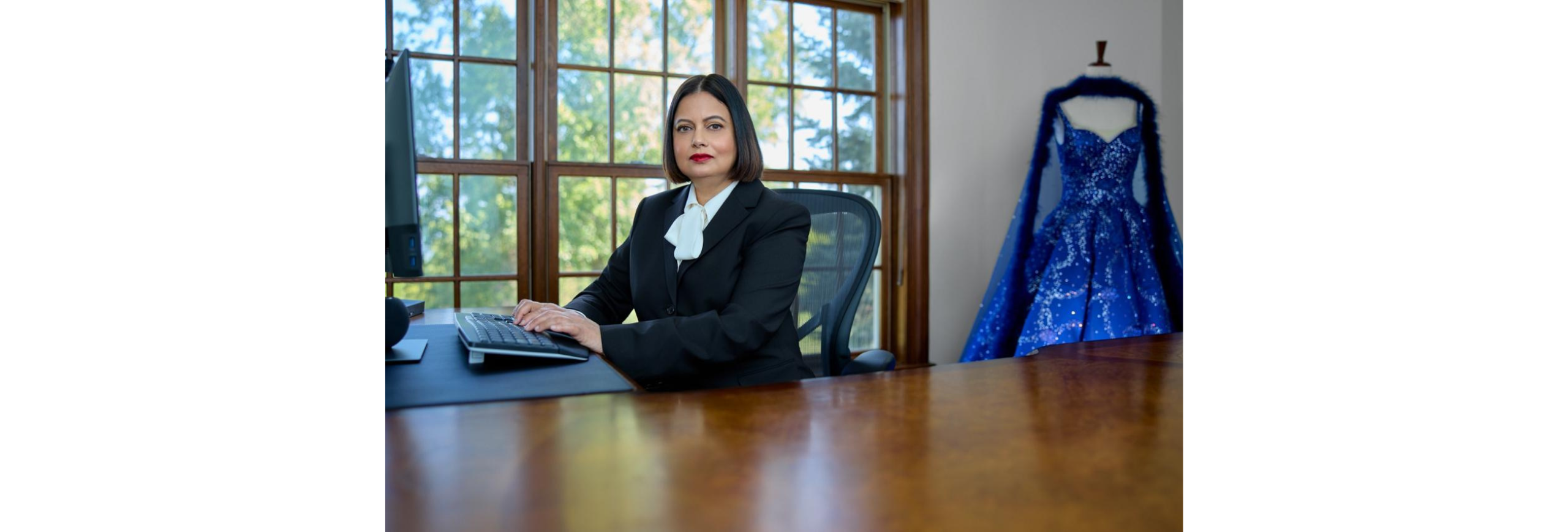
Briana Hetherington, who began her career in media and personal development, has emerged as a figure many mid-size businesses are turning to when they hit internal friction. Through her Conscious CEO™ model, Hetherington focuses on helping leadership teams identify and repair the underlying misalignments that often go unnoticed but can quietly erode culture and performance. Rather than approaching leadership purely from a strategy or performance angle, she brings attention to mindset dynamics, subconscious belief systems, and energy alignment within executive teams.
Hetherington’s approach centers on the idea that “culture is the operating system of your business”, not a department, not a poster on the wall, but the software behind every behavior, decision, and relationship in an organization. Her work through Altruistic Advisory, founded in 2023 and gaining broader traction by 2025, has guided home improvement companies, contractor groups, and marketing teams through processes that reset their internal operating systems. Using values articulation, behavior modeling, scorecards, and key performance indicators (KPIs), Hetherington helps teams move beyond vague culture conversations toward concrete action systems that reflect their ideal workplace.
Often, her clients show up at a breaking point, team members are burned out, department heads are out of sync, or founders are unsure whether they can scale without destroying morale. The first step is to excavate the unexpressed patterns, what isn’t being said, where there is tension bubbling, and how the patterns of behavior from past leaders have contributed to the present results. Then, she helps them start building a clearer set of values and norms, not as a mark of branding, but rather as a basis of accountability and cohesion.
To help organizations shift from chaos to clarity, Hetherington integrates her Conscious CEO™ Framework alongside the Entrepreneurial Operating System (EOS®), a methodology used by over 200,000 businesses worldwide to foster alignment and accountability across leadership teams. Through this dual framework, leaders are guided to define their Vision, Mission, Core Values, and their Envisioned Future, a process influenced by the seminal works of Jim Collins and Jerry Porras, including Built to Last and Good to Great.
She also incorporates Ninety.io, the official EOS software, to support teams in structuring their organizations, placing the right people in the right roles, and embedding clarity through weekly leadership cadences. These cadences include:
- Scorecards with KPIs and measurable targets
- “Rocks,” or 90-day strategic priorities
- Weekly To-Dos with clear accountability
- An Issues List resolved using the IDS™ (Identify, Discuss, Solve) method
Together, these tools form a structured system in which annual, quarterly, monthly, and weekly goals are not just outlined but consistently tracked through Level 10 Meetings® that Hetherington facilitates across both executive and departmental levels. What distinguishes her approach is the integration of mindset work with operational rigor, elevating strategy through emotional literacy and self-awareness across the leadership bench.
Her model is informed by neuroscience as well. Drawing on research around neuroplasticity and subconscious patterning, she views leadership not only as a matter of external execution but also as internal conditioning. The beliefs that leaders hold about people, growth, failure, or power have a direct effect on how they hire, communicate, and respond under pressure. By working at this mindset level, Hetherington aims to help leaders create more self-aware and adaptable cultures. She introduces tools such as the NeuroShift Sequence, an eight-step method to reframe limiting thoughts and build intentional identity patterns, which are then integrated into leadership rhythms and KPIs.
Hetherington also co-leads four elite mastermind tracks under her advisory firm, Altruistic Advisory, each tailored to the home improvement space. These tracks include CEOs and Visionaries, Directors of Marketing, Sales Managers, and Operations Leaders. Within these cohorts, the emphasis is often less on tactical fixes and more on aligning internal values and operating assumptions across departments. Culture is not treated as an afterthought; it’s leveraged as a driving force for scale.
In addition, she leads or co-leads several other mastermind communities: EmpowerHER, a roundtable network of more than 120 women in home improvement; RockStar Insights, a collaborative group of over 100 contractors and visionaries; Tech Advanced: The Innovators Alliance, which focuses on AI and innovation in the trades; and a newly launched Marketing Mastermind for Directors and VPs of Marketing. Across these communities, Hetherington works to normalize conversations around emotional intelligence, transparency, and belief-driven performance.
Her business Within Me™, aimed at children, offers a parallel lens on culture building, this time in school settings. Through workshops on breathwork, affirmation, and mindset awareness, she introduces young students to self-leadership concepts that mirror the internal work she champions in adult teams. She also co-owns The Conscious Creator Community alongside Kat Gottlieb and Jen Hatcher. Together, they’re launching a podcast this fall, supported by a suite of personal growth offerings including courses, programs, and retreats, each centered around identity work, emotional mastery, and conscious leadership.
By reimagining culture as an energetic and behavioral operating system, not simply an HR initiative or mission statement, Hetherington’s work suggests that deeper business transformation often begins with internal clarity. Rather than trying to “fix” outward performance gaps, she invites organizations to examine the belief systems and energetic patterns at their center. Through this lens, culture becomes less about optics and more about daily rhythms, repeated choices, and leadership example-setting.
As companies continue to face turnover challenges, shifting workforce expectations, and the pressure to innovate from within, this focus on internal dynamics may become a larger part of how business health is defined. Whether through KPIs or behavior modeling, emotional literacy or subconscious reframing, the alignment of leadership teams could very well be the next frontier of performance strategy.
Briana Hetherington, through her combined roles at Altruistic Advisory, Within Me™, The Conscious Creator Community, and Finish Line Strategies, remains at the center of the conversation, where strategic clarity meets belief transformation, and culture becomes a catalyst for aligned growth.
Written in partnership with Tom White