
At a time when true-crime content continues to dominate streaming platforms, the pipeline for those stories has remained largely unchanged. Most projects are developed months—or even years—after the events have taken place, reconstructed through court records, interviews, and hindsight. A new initiative from producer and former NYPD officer Steve Stanulis aims to change that model entirely.
Stanulis, founder of Stanulis Films, is launching what may be the industry’s first Investigative Story Division—a development arm dedicated to sourcing film, television, and documentary projects directly from active private investigations as they unfold.
Working in tandem with Silver Shield Investigations, the division sits at the intersection of real-time intelligence and cinematic storytelling. Rather than acquiring stories after they’ve already made headlines, Stanulis and his team identify compelling narratives during the investigative process itself—when stakes are highest and outcomes are still uncertain.
“Most true-crime stories are told after everything is already resolved,” Stanulis says. “We’re looking at cases as they’re happening—when decisions are being made in real time, and the consequences are immediate.”
This approach introduces a level of urgency and authenticity rarely seen in the genre. In many cases, the first 48 to 72 hours of an investigation determine its trajectory, shaping outcomes that may never be fully understood by the public. By accessing stories at this critical stage, the Investigative Story Division aims to capture not only what happened, but how and why it happened, as it unfolds.
The model also offers a rare degree of access. Through Silver Shield Investigations, Stanulis and his team are involved in a wide range of real-world cases, from infidelity and missing persons to high-stakes private intelligence assignments. While not every investigation is suitable for adaptation, select cases are evaluated for their narrative potential, with strict attention to legal and ethical considerations.
“There’s a responsibility that comes with this,” Stanulis says. “Not every story should be told, and not every case is appropriate for development. But when you find the right one—something with real stakes, real emotion, and real consequences—it becomes incredibly powerful.”
The division’s first project, currently in development, is an investigative docuseries titled “72 Hours to the Truth.” The series centers on the critical early window of active investigations, following cases where the first three days are often the most decisive. Combining real investigative insight with cinematic storytelling, the project aims to offer a rare look inside the decision-making process that shapes real-world outcomes.
Stanulis brings a unique combination of experience to the initiative. A former NYPD officer turned private investigator, he has spent years operating in high-pressure environments where timing, instinct, and information can determine outcomes. In parallel, he has built a career as a producer across film and television, with projects spanning both independent credibility and commercial reach.
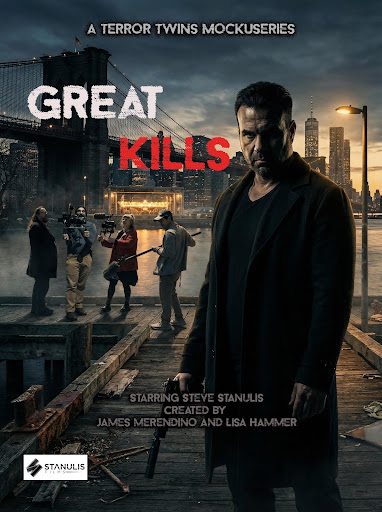
His series Great Kills achieved viral traction and currently holds an 8.5 rating on IMDb, streaming on major platforms. He also produced the feature film Monica, which received Independent Spirit Award recognition and was distributed by IFC Films—further establishing his ability to develop and deliver projects at a high level. He is currently heading into pre-production on the feature Lazarus Syndrome.
By bridging the gap between active investigations and content development, Stanulis is positioning the Investigative Story Division as both a creative engine and a new kind of story pipeline—one that reflects the growing demand for authenticity in an increasingly saturated true-crime market.
Industry interest in true crime shows no signs of slowing, but audiences are becoming more discerning—gravitating toward stories that offer deeper access and a more immersive perspective. In that landscape, the ability to source material directly from real-time investigations could represent a meaningful shift in how these stories are discovered and told.
“This isn’t about chasing trends,” Stanulis says. “It’s about creating a new lane—where real investigations and storytelling evolve together.”
As the division moves forward, multiple projects are already being evaluated for development across both scripted and unscripted formats. While details remain under wraps, the long-term vision is clear: to build a scalable pipeline of original content rooted in real-world cases, offering a level of immediacy and authenticity rarely seen in the genre.
In an industry where access is everything, Stanulis may have found a way to bring audiences closer to the truth than ever before—while it’s still unfolding.
Written in partnership with Tom White