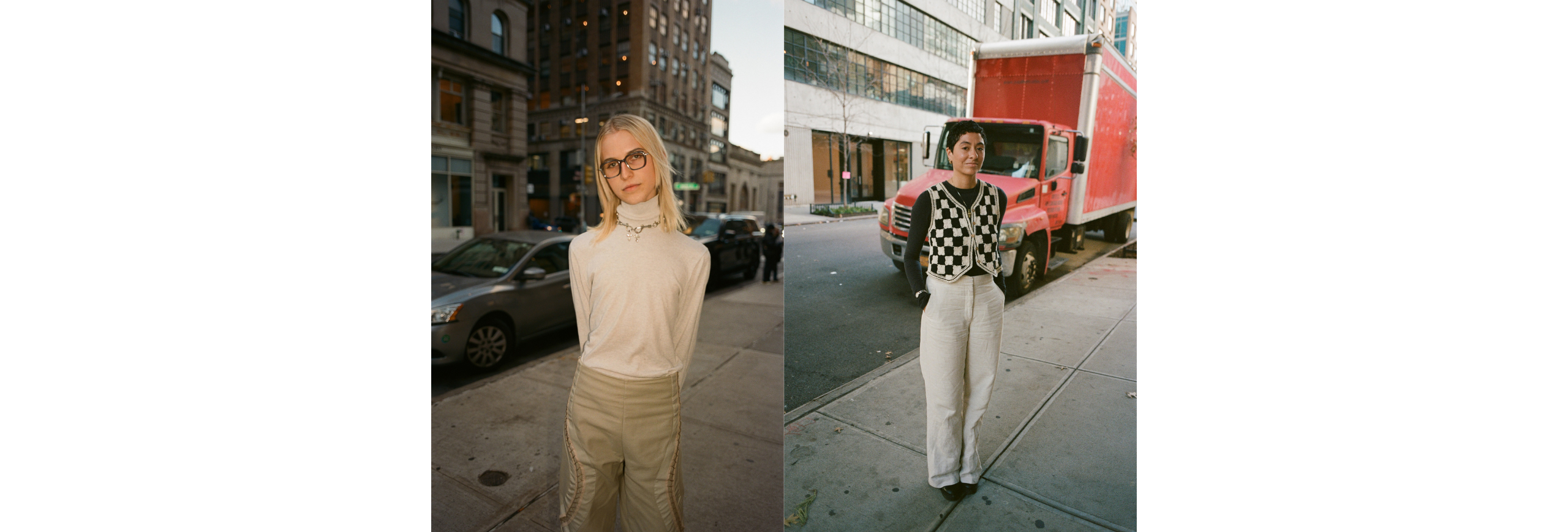

In a city where the mythology of the artist often eclipses the machinery that sustains them, Camilla Ridgers turns her lens toward those who sit at the threshold. Gallerina, her ongoing photographic series documenting gallery assistants across New York, is a quietly arresting study of the art world’s most visible yet least examined protagonists. Positioned outside their places of work, from blue-chip storefronts in Manhattan to scrappier project spaces in Bushwick, Ridgers’ subjects stand neither fully inside nor outside the institutions they serve. They occupy the doorway, the literal and symbolic hinge of contemporary art’s public face.
Ridgers, an intermedia artist who graduated from Central Saint Martins and now works at Timothy Taylor Gallery in New York, brings an insider’s acuity to the project. She understands the choreography of the front desk: the calibrated warmth, the sharp aesthetic instinct, the tension between aspiration and service. In Gallerina, these tensions are rendered visible. Each portrait follows a consistent format, image, name, gallery, favourite artist, forming a typology that is at once affectionate and incisive. The repetition underscores the shared structure of their roles, while the individuality of dress, posture, and gaze reveals the idiosyncratic ways each assistant inhabits that structure.
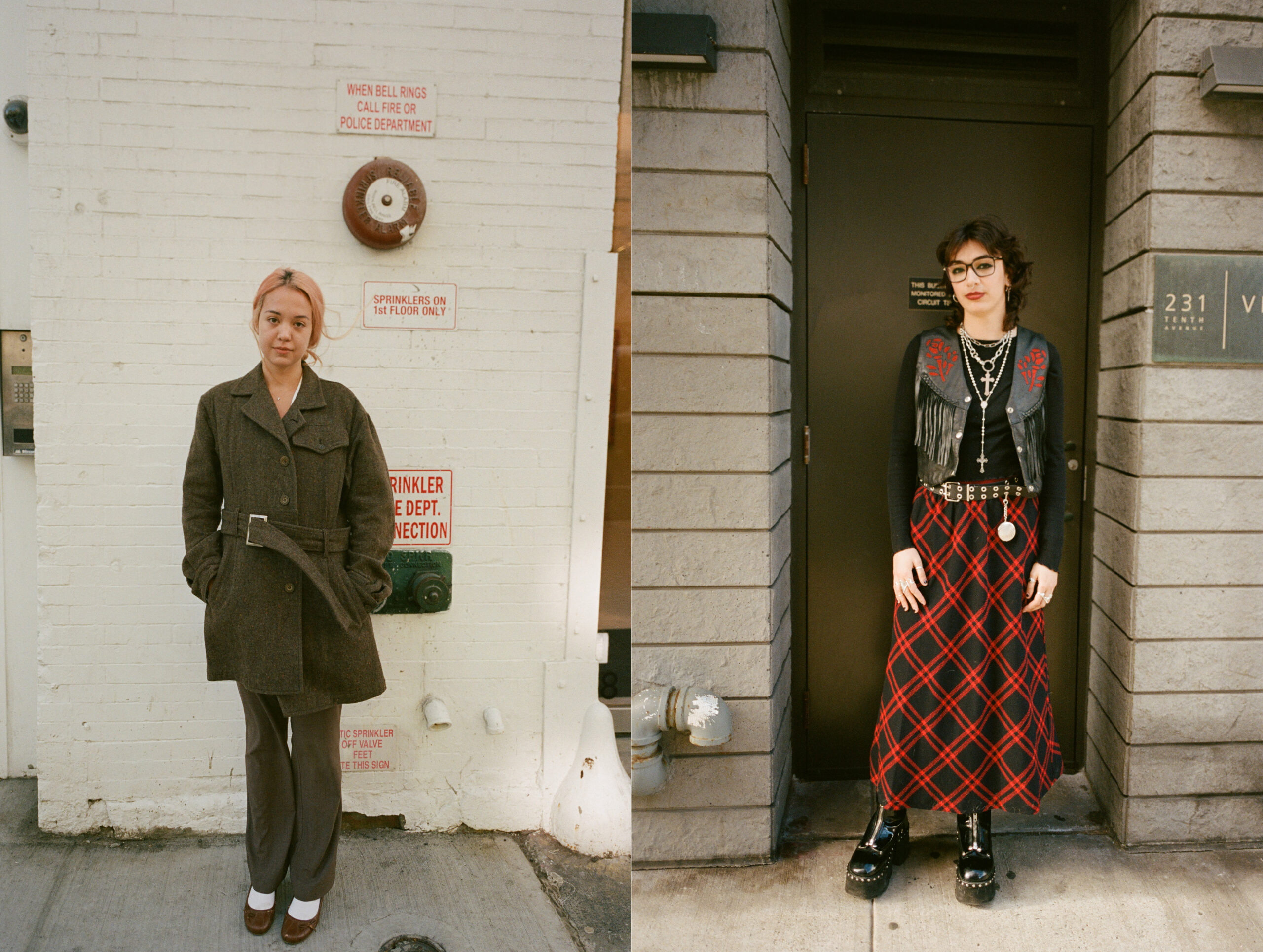
The photographs themselves are deceptively simple. Shot on the street just beyond the gallery door, they borrow the vernacular of fashion portraiture while retaining the sobriety of documentary practice. In one image, a young woman stands against a pale, worn Manhattan wall. She wears a long black skirt and a sheer, patterned blouse, her dark hair loose and slightly windswept. White socks peek above black Mary Janes, lending the look a deliberate awkwardness, part art-school romantic, part downtown severity. Her hands are loosely clasped, rings catching the light, her gaze directed off-camera as if momentarily released from the performance of reception. The neutral facade behind her evokes the anonymity of many gallery exteriors, where architectural minimalism masks the intense social ecosystems within.
In another photograph, a different assistant stands framed by a dark doorway on Tenth Avenue, the building’s stonework crisp and corporate. She wears a black top beneath a leather vest embroidered with red motifs, layered silver necklaces cascading down her chest. A red-and-black plaid skirt falls to mid-calf, paired with glossy platform boots. The styling is bolder, more declarative, a studied collision of punk, goth, and art-world polish. Her glasses and steady, frontal gaze signal intellectual self-possession. Behind her, the discreet signage of the gallery underscores the proximity to institutional power. Yet Ridgers positions her subject squarely in front of the threshold, as if to insist that the personality at the desk is as much a part of the gallery’s identity as the artists on its roster.
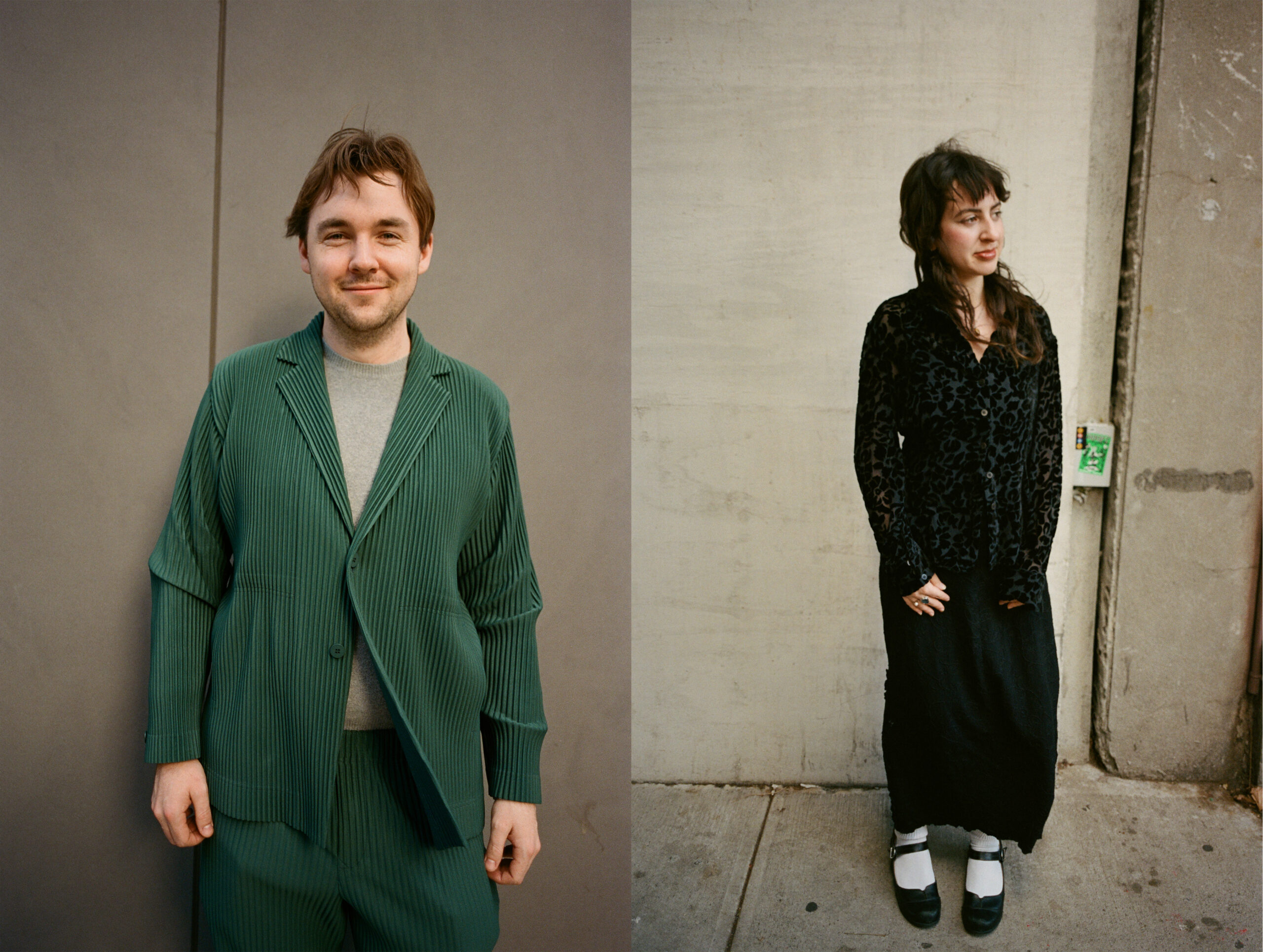
These images resonate deeply within the context of New York, a city whose art infrastructure is both glamorous and grinding. From Chelsea’s pristine white cubes to the converted warehouses of Bushwick, galleries operate as nodes in a global network of capital and taste. The front desk assistant is often the first point of contact, a gatekeeper, receptionist, registrar, sales support, and aspiring artist all at once. Ridgers captures this multiplicity through clothing and stance. The outfits in Gallerina read like coded uniforms, subtle negotiations between individuality and institutional expectation. Black dominates, of course, but it is inflected through lace, leather, tartan, velvet, or crisp cotton. Accessories, crosses, chains, rings, function as quiet declarations of allegiance, whether to subculture, art history, or personal myth.
What distinguishes Gallerina from mere street style documentation is its conceptual underpinning. The project is conceived as a visual prelude to a short novel Ridgers is writing under the same title, a work that promises to dissect the art world from the perspective of those who hold it together day-to-day. In this sense, the photographs operate as character studies. Each assistant is not only a worker but a potential protagonist. The inclusion of their favourite artist gestures toward interiority, hinting at ambitions and affinities that extend beyond the desk. The typological structure recalls August Sander’s cataloguing of social types, yet Ridgers’ tone is more intimate, less taxonomic. There is tenderness in the way she allows each subject to define themselves within the frame.
The project also situates itself within a lineage of institutional critique, though it eschews overt polemic. Rather than exposing scandal or satirising the market, Ridgers focuses on labour—specifically, aesthetic labour. The front desk is a site where taste is performed continuously. Assistants must embody the gallery’s brand while maintaining their own creative identities. In New York, where rent is punishing and ambition is currency, the gallery job often doubles as a foothold and a holding pattern. Ridgers’ images register this precarious balance. The assistants appear composed, stylish, self-aware. Yet there is a slight hesitancy in some postures, a sense of being caught between arrival and departure.
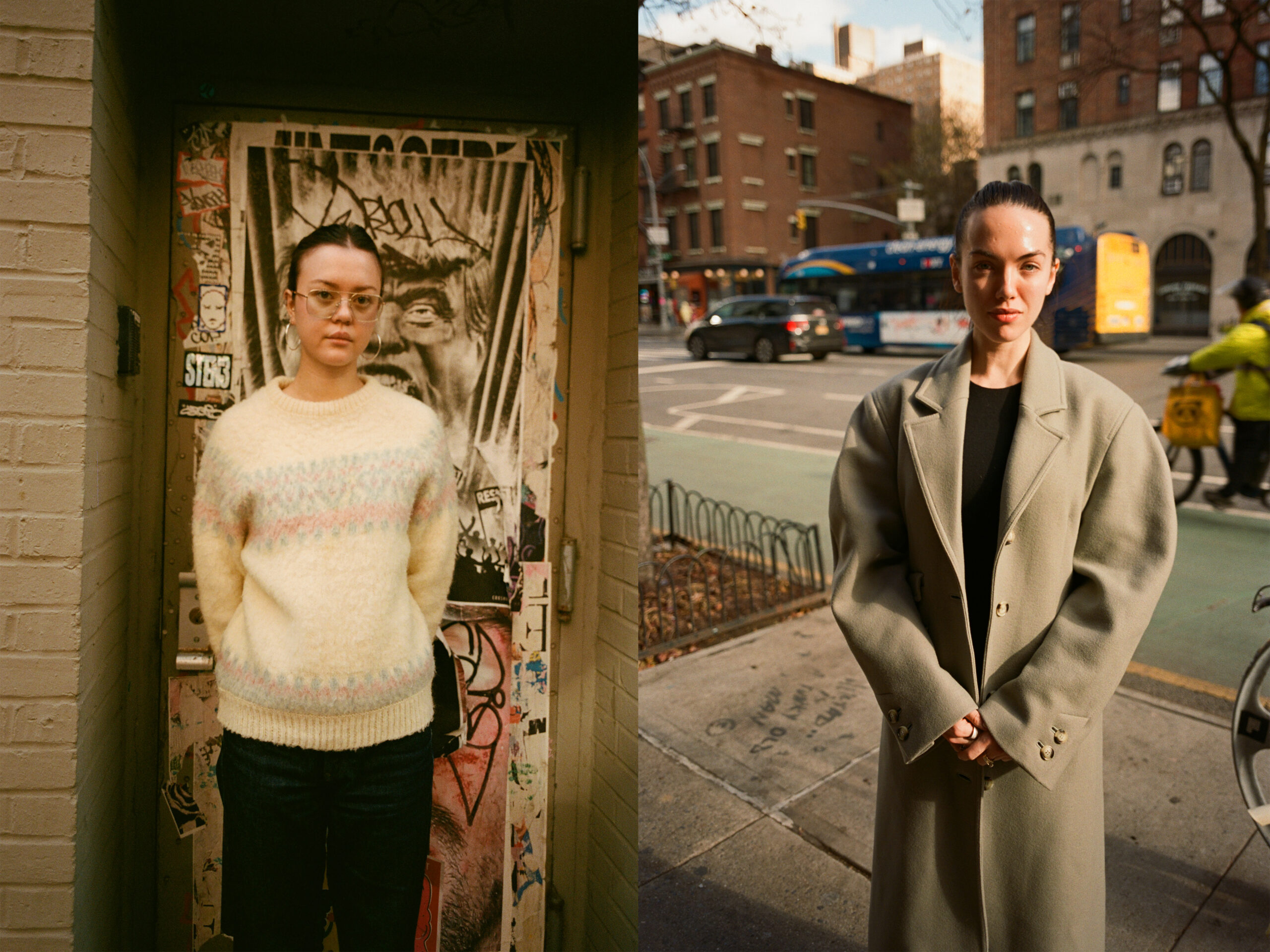
By photographing her subjects outside rather than inside the gallery, Ridgers performs a subtle displacement. The white cube, with its aura of neutrality, is replaced by the city’s textured surfaces: concrete, stone, metal doors, scuffed pavements. This shift collapses the boundary between art and life, reminding viewers that the art world is embedded within urban realities. The assistants are not abstract functionaries; they are New Yorkers navigating subways, side streets, and escalating rents. The street becomes an extension of the gallery, and the gallery an extension of the street.
Ridgers’ background in painting and installation informs the compositional rigor of the series. The verticality of the figures, often centered and full-length, lends a sculptural presence. The muted, filmic colour palette evokes nostalgia without sentimentality, as if these images might one day serve as an archive of a particular moment in New York’s art ecology. There is an awareness that the city’s cultural geography is in constant flux, that galleries migrate and assistants move on. Gallerina captures them in situ, at a precise intersection of place, role, and aspiration.
Camilla Ridgers’ Gallerina is less about spectacle than about attention. It attends to those who are always present yet rarely foregrounded. In doing so, it reframes the art world not as a constellation of stars but as a network of workers whose style, intellect, and emotional labour sustain the system. In New York, where the myth of the artist remains potent, Ridgers offers a counter-myth: that of the gallerina, poised at the door, quietly holding the scene together.
Written in partnership with Tom White