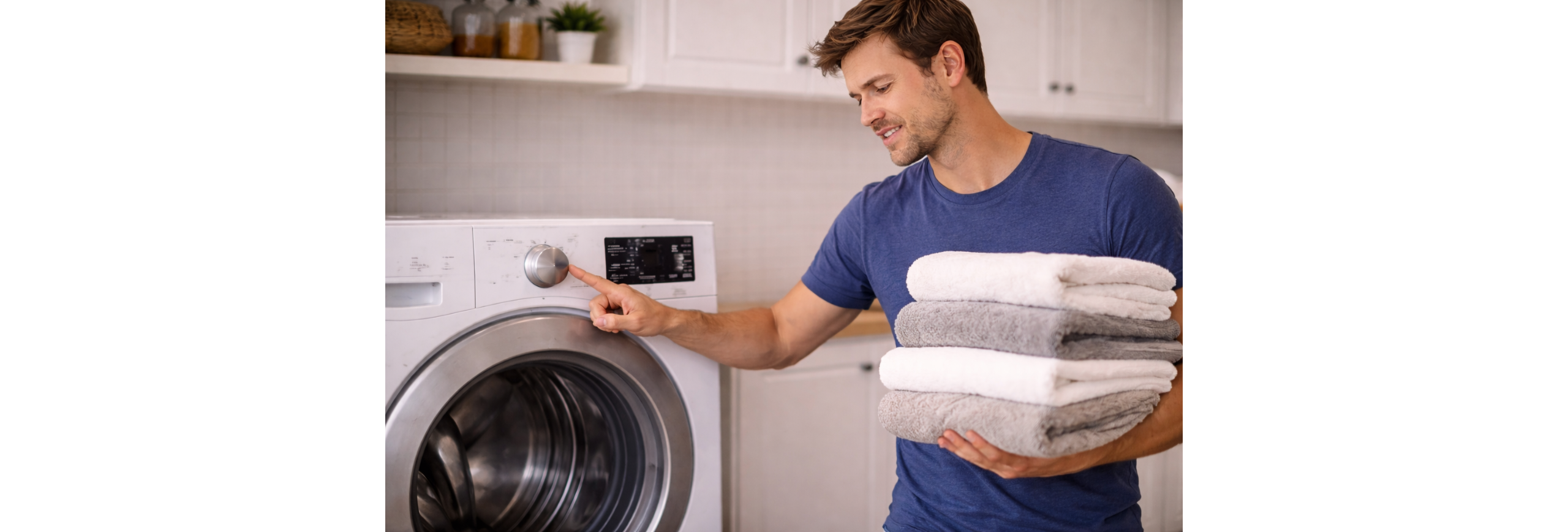

The temperature to wash towels determines both cleaning effectiveness and fabric longevity. Many people automatically choose hot water assuming it cleans better. Others default to cold water hoping to save energy and preserve fabric quality. The reality is more nuanced than simply picking hot or cold.
Water temperature affects bacteria elimination, detergent performance, fabric wear, and energy costs differently. Understanding how temperature impacts each factor helps you make informed choices for your specific situation. The right temperature balances hygiene needs with practical considerations like energy bills and towel lifespan.
This guide explains what temperature to wash towels based on usage, soil level, and priorities. You’ll learn when hot water is necessary and when cold water works just as well.
How Does Water Temperature Affect Bacteria Elimination?
Temperature plays a critical role in killing bacteria and viruses during the washing process. However, the relationship between heat and microbial elimination is more complex than most people assume.
According to CDC laundry guidelines, water temperatures of at least 160°F (71°C) for a minimum of 25 minutes effectively destroy microorganisms. Most home water heaters reach only 120-140°F maximum for safety reasons. This means standard home hot water cycles don’t reach sanitizing temperatures.
The CDC also notes that lower temperatures between 71-77°F (22-25°C) can reduce microbial contamination when combined with proper detergent and bleach. Modern detergents contain enzymes and surfactants that break down bacteria even in cold water. The mechanical action of washing agitates and rinses away most bacteria regardless of temperature.
Dryer heat provides additional bacteria-killing power that wash temperature alone cannot achieve. Temperatures reached during drying and ironing provide significant microbiocidal action according to infection control research. This means complete drying matters as much as wash temperature for overall hygiene.
What Temperature To Wash Towels: Hot Water Benefits
Hot water washing offers specific advantages for towels used in certain situations. Understanding when hot water provides real benefits prevents unnecessary energy use.
Maximum Cleaning Power
Hot water dissolves oils, lotions, and greasy residues more effectively than cold water. Bath towels accumulate body oils, skincare products, and soap scum during normal use. Temperatures above 130°F help break down these substances for removal.
The heat activates detergent ingredients more fully, allowing them to work faster and more thoroughly. Enzymes in detergents function optimally within specific temperature ranges, often between 100-140°F.
When Hot Water Is Necessary
Certain situations genuinely require hot water washing for towels to maintain proper hygiene standards:
- Towels used during illness or infection
- Kitchen towels exposed to raw meat or poultry
- Gym or workout towels with heavy sweat and bacteria
- Towels from households with compromised immune systems
- Heavily soiled towels with visible stains or odors
Quality towels designed with antimicrobial properties reduce the need for constant hot water washing while maintaining freshness.
What Temperature To Wash Towels: Cold Water Advantages
Cold water washing has gained popularity as detergent technology improved dramatically over recent decades. Modern formulations work effectively even at temperatures below 60°F.
Energy Efficiency and Cost Savings
According to EPA WaterSense data, water heating consumes approximately 90% of the energy used to run clothes washers. Switching from hot to cold water dramatically reduces electricity or gas consumption per load.
A household washing eight loads weekly saves roughly $60-100 annually by using cold instead of hot water. Over a washer’s 10-year lifespan, cold water washing saves $600-1,000 in energy costs.
Fabric Preservation
Cold water extends the towel’s lifespan by reducing fiber breakdown from heat exposure. Cotton fibers weaken and deteriorate faster when repeatedly washed in hot water. Colors fade more quickly and elastic components lose stretch under high temperatures.
Towels washed consistently in cold water maintain their original softness and absorbency longer. The gentler treatment preserves fabric structure while preventing the shrinkage that hot water causes.
What Temperature To Wash Towels: Warm Water As Middle Ground
Warm water (90-110°F) offers a compromise between hot and cold water washing. This temperature range provides the benefits of both extremes while minimizing their drawbacks.
Warm water removes most soils effectively while using less energy than hot cycles. It activates the detergent sufficiently for good cleaning without the harsh fabric wear of very hot water. Many modern washing machines optimize warm water temperature for the best results.
For regularly used bath towels without heavy soiling, warm water often represents the sweet spot. It handles body oils and skincare residue while preserving fabric quality reasonably well.
Does Detergent Choice Affect Ideal Wash Temperature?
Detergent formulation significantly impacts the temperature to wash towels for optimal results. Not all detergents work equally well across temperature ranges.
Traditional detergents required hot water to dissolve completely and activate cleaning agents. Modern cold-water formulations contain special enzymes that remain active at lower temperatures. These enzymes target proteins, starches, and oils even in 60°F water.
When using cold-water detergent, hot water provides minimal additional cleaning benefit. The formulation is specifically designed for lower temperature effectiveness. Conversely, standard detergents may leave residue in cold water if not fully dissolved.
Always match your detergent type to your preferred wash temperature. Check product labels for temperature recommendations to ensure proper performance.
What About Sanitizing Cycles For Towels?
Many modern washing machines include “sanitize” cycles that heat water to higher temperatures. These cycles reach 150-165°F to meet NSF sanitization standards for home appliances.
Sanitize cycles work well for situations requiring maximum hygiene without commercial equipment. Use them for:
- Towels from sick household members
- Towels exposed to bodily fluids
- Kitchen towels used for raw food preparation
- Periodic deep cleaning of all towels
However, a frequent sanitizing cycle accelerates towel wear significantly. Reserve this setting for genuine hygiene needs rather than routine washing. The high heat stresses fabric fibers and elastic components beyond normal wear.
How To Choose The Right Temperature For Your Towels
Several factors determine the ideal wash temperature for your specific towels and situation. Consider these elements when making your decision:
Key decision factors include:
- Towel usage type (bath, kitchen, gym, guest)
- Soil level and type of residue present
- Whether anyone in the household is ill
- Your energy cost priorities
- Fabric type and quality of towels
- Water hardness in your area
For most households, washing bath towels in warm water every 3-4 uses provides sufficient cleaning. Switch to hot water or sanitize cycles only when dealing with illness or heavy contamination.
Kitchen towels benefit from hot water more consistently due to food-related bacteria concerns. Wash these every 1-2 days in hot water for food safety.
Quality bedding and towels with built-in antimicrobial properties stay fresh at lower temperatures than standard cotton.
Can You Mix Temperature Settings For Better Results?
Some washing strategies combine different temperatures within a single load for enhanced results. This approach leverages temperature benefits at appropriate cycle stages.
Washing in cold water followed by a hot water rinse can provide cleaning efficiency with less energy use. The cold wash removes most soil while the hot rinse helps sanitize and fluff fibers.
However, most modern machines don’t allow temperature variation between wash and rinse cycles easily. The added complexity rarely justifies marginal improvements for home laundry.
Instead, focus on proper sorting by soil level and adjusting temperature accordingly. Wash lightly soiled towels in cold, moderately soiled in warm, and heavily soiled in hot.Visit Miracle Made for towels engineered to stay fresh and clean even with energy-efficient cold water washing cycles.
Written in partnership with Tom White